
Decorative glass is glass that has been changed to add style, colour, texture, or a special finish. It can enhance a home, help with privacy, and still let in light.
Decorative glass can be used in many applications, including windows, a window in a door, internal doors, shower screens, partitions, and glass panels for cupboards and furniture.
With so many designs and options, it helps to understand the main types of decorative glass before you decide what will suit your space.
How To Choose The Right Type Of Glass
When you choose a type of glass, start with what you need most. If you want privacy, you may prefer frosted glass, etched glass, or textured glass with strong patterns. If you want a clear view and a decorative touch, you might choose stained glass or a printed design that keeps the glass more transparent.
Think about where the glass will go, too. A bathroom window often needs more privacy than a living room window, while doors and partitions may need stronger safety glass, depending on where they are fitted.
It also helps to consider how the design will look from both sides, how it will work with the light at different times of day, and how easy it is to clean. Some finishes show fingerprints more than others, and some patterns can hide marks better.
Etched Finishes:
Acid Etched
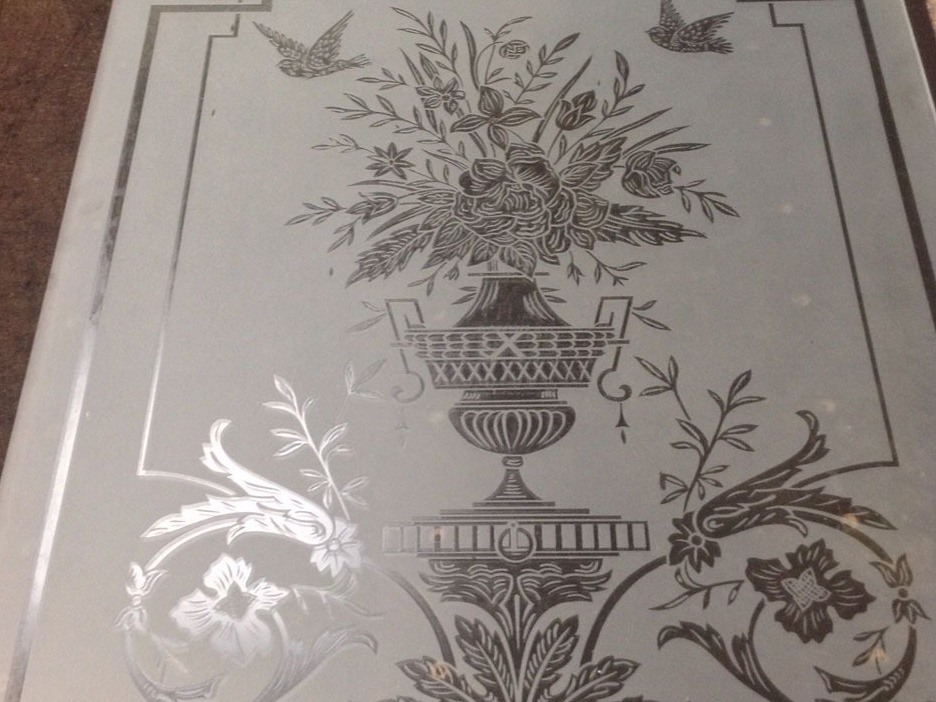
Acid-etched glass is created using a chemical process that changes the surface of the glass. This makes the surface look soft and matte, so it spreads light and reduces glare. It is commonly used when you want privacy without blocking daylight, such as in windows, doors, and office partitions. Many people choose it because it feels smooth, looks modern, and can be made in different styles.
Laser-Etched
Laser-etched glass uses a laser to mark the surface with detailed artwork. It is a good option when you need crisp lines or a complex design, such as names, images, or fine patterns. This type of decorative glass is often used for special panels, feature windows, and doors where you want a clear, sharp result.
Carved Glass
Carved glass is etched or blasted more deeply to create a sculpted look. Because the design has depth, it can catch light in a different way and add extra elegance. It is often used as a feature in a home, such as on glass panels in doors or as decorative inserts.
Sandblasted Glass
Sandblasted glass is made by blasting the surface with fine, hard particles. This creates a frosted look, similar to some etched finishes, but it can also create detailed designs. Sandblasting is often used for logos, patterns, and custom pieces where you want a strong decorative effect. It can suit both traditional and modern homes, depending on the design you choose.
Frosted Glass and Privacy Glass
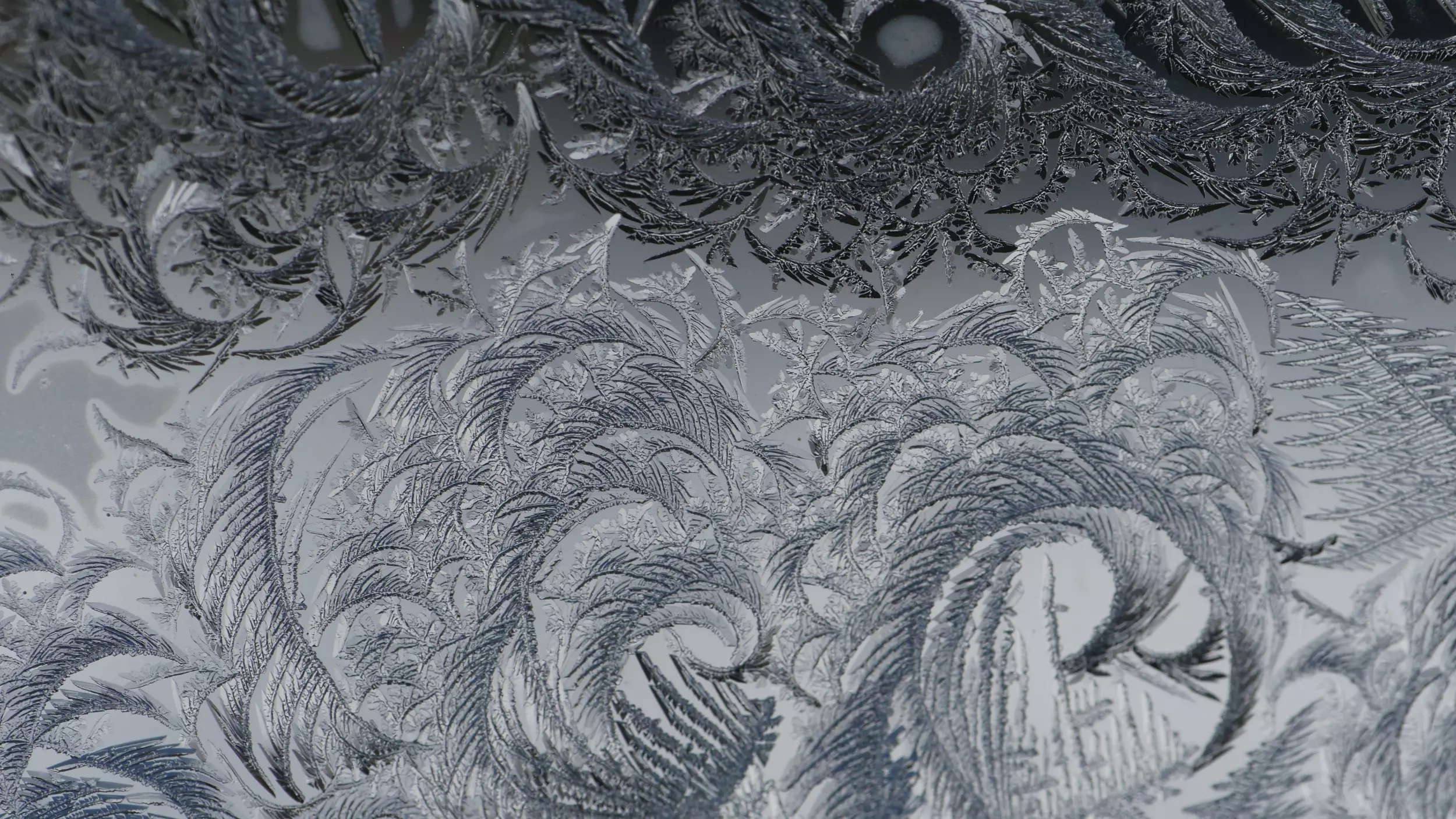
Frosted glass is a common term for glass with a cloudy, matte surface. It can be made in different ways, including chemical etching, sandblasting, or special inks. Frosted glass is a popular choice for privacy in bathrooms, front doors, and partitions, while still letting light pass through. If you are comparing types of decorative glass, frosted glass is one of the most commonly used options because it balances privacy and brightness so well.
Textured and Patterned Glass:
Cast Glass
Cast glass is made by pouring molten glass into a mould. This creates a strong texture and can produce more artistic patterns. It is often used for feature pieces and panels where you want a bold surface that plays with light.
Patterned Glass
Patterned glass is made when a texture is pressed into the glass during the making process. This creates designs that you can see and feel, and it also changes how light passes through. Patterned and textured glass is found in a wide range of styles, from simple ripples to bold, detailed patterns. It is commonly used in windows, internal doors, and partitions where you want privacy but still want natural light.
Rolled Glass
Rolled glass is a type of patterned glass that's made using rollers that press a repeating texture into the surface. The result is a consistent pattern across the sheet, which can be helpful when you need several matching glass panels for doors or windows.
Colour and Artwork on Glass:
Stained Glass
Stained glass is made from pieces of coloured glass that have been joined together to create a picture or pattern. It is often linked to traditional designs, but it can also be made in modern styles. Stained glass can add colour, character, and a special feel to homes, especially in entrance doors and feature windows in England and across the UK.
Digital Art and Printed Glass
Digital art on glass is created by printing a design onto the surface. This can include photos, patterns, and custom designs in almost any style. It can provide a strong decorative finish and is useful when you want a very specific look that is hard to achieve with other methods.
Ceramic Frit and Enamel Finishes
Ceramic frit is a colour coating that is fired onto the glass so it becomes part of the surface. This makes it long-lasting and suitable for many applications, including areas that get a lot of sunlight. It can be used to create patterns, add privacy, or simply offer a block of colour for a bold design.
Painted and Back-Painted Glass
Painted or back-painted glass has a colour layer added to one side, often to make the panel fully opaque. It is commonly used for splashbacks, wall panels, and furniture. Because it comes in a wide variety of colours, it is a simple way to enhance a kitchen or bathroom and add a clean, modern finish.
Dichroic Glass
Dichroic glass has very thin layers that make it reflect and show different colours as the light changes. It is often used for decorative pieces and feature panels where you want a bright, eye-catching effect.

Heat-Shaped and Kiln-Worked Glass :
Bent and Curved
Bent and curved glass starts as flat glass that is heated so that it can be shaped. It is used when straight panels will not fit the space, such as curved screens, rounded windows, and some stylish doors.
Fused Glass
Fused glass is made by melting two or more pieces of glass together in a kiln. This is how many decorative bowls, panels, and art pieces are created. Fused glass can be used to build up colour, patterns, and texture, which makes it popular for feature designs and statement glass panels.
Heart-Sculpted Glass
Heat-sculpted glass is shaped with heat to create texture, movement, or a 3D look. It is often used for one-off art pieces and decorative panels that are made to order.
Safety, Strength, And Where It Matters
Not every decorative finish changes how strong the glass is, so it is important to match the look with the right base type of glass. Annealed glass is standard glass that can be cut and worked, but it is not always the best choice for doors and low-level windows.
In many situations, tougher safety glass is required, especially for doors, large panels, and busy areas in the home. Heat-strengthened glass and fully tempered glass are made to be stronger, but they behave differently if they break, so it is worth checking what you require for your project.
If you are planning glass panels for doors or partitions, it is also useful to think about sound, warmth, and how the glass will feel day to day. Some products can be combined with films or extra layers to help with comfort and performance, while still keeping the decorative finish.
Our Decorative Films And Layered Options
Decorative films are thin layers that can be applied to glass to create patterns, a frosted look, or extra privacy. They are a flexible option because they can be changed later, and they can suit both renters and homeowners. Films are also used in some glass builds where the design is placed within layers, which can protect the finish and make cleaning easier.
Decal Transfer
This is a process that is used for the creation of decorative glass through the application of a ceramic decal. The decals are then transferred directly onto the glass.
Decorative Films
Decorative films are commonly very thin substrates that come in either roll or sheet form. They have decorative features. They can be applied either to glass or incorporated into laminated or insulated glass units.
Feature Details And Extra Effects
V-groove glass has fine grooves cut into the surface to create lines and shapes that catch the light. Silvered glass adds a reflective, mirror-like finish, which can make a space feel bigger and brighter. Non-slip surface treatments are used when glass is part of flooring or steps, helping it stay safer underfoot while still looking stylish.
V-Groove
This is glass which has a very shallow groove engraved into the surface. The groove is formed in a V shape in order to form two small channels or bevels. This process is possible on most types of glass.
Channel Glass
Channel glass is a structural glass system that is used to create light-transmitting walls. They are used along with perimeter frames of various shapes and sizes. Non-tempered float glass channels feature cast surfaces which are then capable of providing privacy and light diffusion.
Fully Tempered Glass
Bent or flat glass that has been heat-treated, so the glass has a minimum surface compression of 10,000 psi or an edge compression of around 9,700 psi.
Annealed Glass (Non-Tempered)
Basic float glass that has been treated by using a heating and controlled cooling process. This then results in a form of glass which has had its internal stresses reduced to a point where it can be handled, cut, finished and fabricated.
Etched Glass
Etched glass is a generic term which is used to describe glass which has been modified in a variety of ways in order to create a surface which diffuses any transmitted light. Different pieces of etched glass have differing levels of transparency.
Silvered Glass
Silvered glass is a form of glass that has had a surface treatment applied in order to create a reflective or mirrored property. The substrate can be of any pattern, colour, or type.
Ordering, Custom Work, and Getting The Best Result
If you want a custom finish, it helps to start with a clear idea of the style you like and the level of privacy you need. Many types of decorative glass can be created in different designs, sizes, and patterns, so you can choose something that fits your home rather than forcing the space to fit the glass. It is also smart to think about how many panels you need, whether you need matching pieces for doors and windows, and whether you want the same view from both sides.
If you're not sure what to choose, you can view sample designs on our website and compare the styles in different lights. You can also decide whether you want something bold and modern or more traditional. For further advice, you can get in touch to discuss your options, order details, and what type of glass will work best for your needs. Contact us by email or by phone on 01204 596 055, and share your details about where the glass will be used (such as windows, doors, or partitions), so the right finish can be provided.
Are you interested in acid etched glass? If you require Acid Etched Glass Specialist, contact our expert today. We offer professional glass decoration throughout the UK.